As Chief Growth Officer & Co-founder of Brief – Executive Intelligence, Clint Oram has spent two decades at the intersection of technology and human connection. He sat down with Clark Newby on the Tomorrow’s Best Practices Today podcast to discuss a shift he believes is as significant as the dawn of the internet—or perhaps even as foundational as the invention of electricity.
For B2B marketers, Oram’s insights offer a roadmap for navigating the “standard Silicon Valley boom-bust story” currently unfolding. From the death of “spam cannon” social selling to the rise of the “journey-man generalist,” here’s how B2B marketers can future-proof operations in the age of AI.
Beyond the Hiring Bubble: Why the “AI Job Theft” Narrative is a Red Herring
The tech industry is currently feeling a “freeze,” with high-profile layoffs making headlines daily. While many management teams use AI as a convenient scapegoat for these staff reductions, Oram offers a more pragmatic view.
He argues that we are currently experiencing a market reset following a “false bubble” created during the pandemic. Between 2022 and 2023, stimulus money and work-from-home mandates led to aggressive over-hiring in the software space. As that demand cooled, companies began scaling back to pre-bubble levels.
“It makes you sound smart to say AI right now… but companies are having to let go of that extra talent they were hiring during the boom times because things are a lot slower at the moment.”
The current economic softening isn’t necessarily about machines replacing humans; it’s about a return to sustainable growth. The B2B marketers that will thrive are those that stop fearing replacement and start focusing on doubling the productivity of their existing talent through AI.
The End of the “Spam Cannon”: A New Era for Social Selling
Ten years ago, the industry was promised that “Social CRM” would revolutionize buyer-seller transparency. Instead, platforms like LinkedIn often devolved into “spam cannons” filled with automated InMails that buyers increasingly ignore.
Oram believes we are on the cusp of a social selling reinvention. The traditional model, where sales reps ignore the top of the funnel to focus solely on closing, is broken. B2B marketers must help their clients transition to a model where every employee is a brand ambassador.
- The Value Equation has Changed: When hiring, a seller with 5,000 followers is standard; a seller with 50,000 followers is a strategic asset who can drive brand visibility on a much wider platform.
- AI as a Content Engine: Large Language Models (LLMs) allow individuals to act as their own mini-marketing departments. By using AI as a “strategy assistant” or “foil” for brainstorming, professionals can maintain a constant social presence without sacrificing the time needed for deep work.
The Rise of the “Journeyman Generalist”
A recurring theme in Oram’s career is the value of the “journeyman generalist”—the professional who uses AI to be competent across many topics while maintaining deep expertise in one.
Oram uses AI for everything from advising companies to writing blog articles, but he warns against over-reliance. While AI can get you 80% of the way there on a creative project, the final 20%—the nuanced expertise—is where the real value lies.
“AI is a bit of that space of simplifying the complicated, but complicating the simple.”
For marketing leaders, the goal is to turn every team member into an “AI expert” who views the technology not as “cheating,” but as a necessary tool for the modern professional. Oram even suggests using AI as a personal recruiter or career coach to help staff understand how to apply it in a professional context.
Building Your “AI Avengers” Toolkit
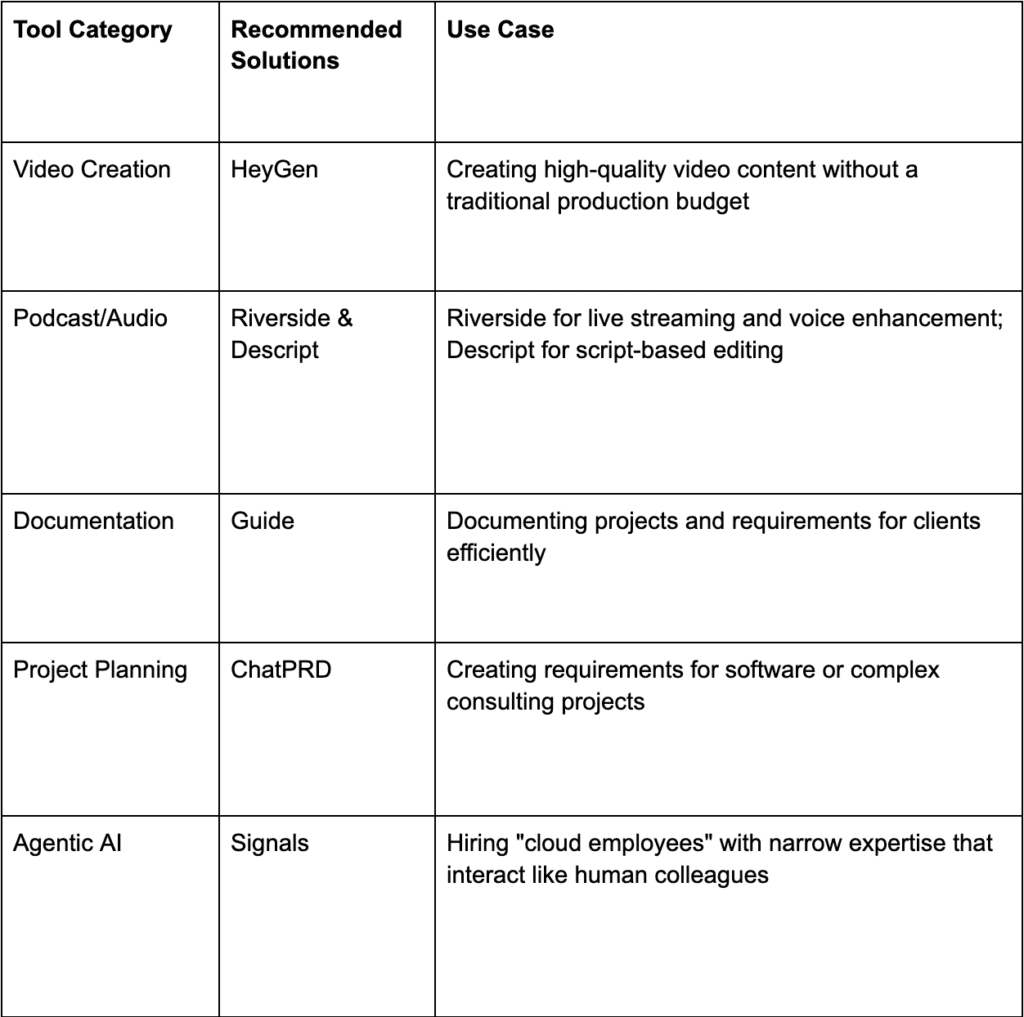
Oram spends much of his time on his own podcast, Prompt This, interviewing leaders to find the “sweet spots” for various AI tools.
For B2B marketers looking to build their own tech stack, he highlights several key players:
Final Thoughts: Electricity or the Internet?
Oram suggests we are in a period of change more exciting than the birth of the internet in 1995. The “micro-conclusions” we draw today may shift tomorrow, but the underlying trajectory is clear: AI is not a trend to be waited out, but a fundamental shift in how business is conducted.
Whether AI proves to be as big as the internet or as foundational as electricity, the message for B2B marketers is the same: Embrace the “on-ramp,” stay skeptical but pragmatic, and use these tools to humanize—rather than automate—the B2B experience.
Watch the full interview here!