In today’s hyper-accelerated digital landscape, B2B marketers are constantly navigating a shifting terrain of platforms, content formats, and engagement strategies. The rules of engagement have changed, and what worked even two or three years ago might now be leaving massive opportunities on the table.
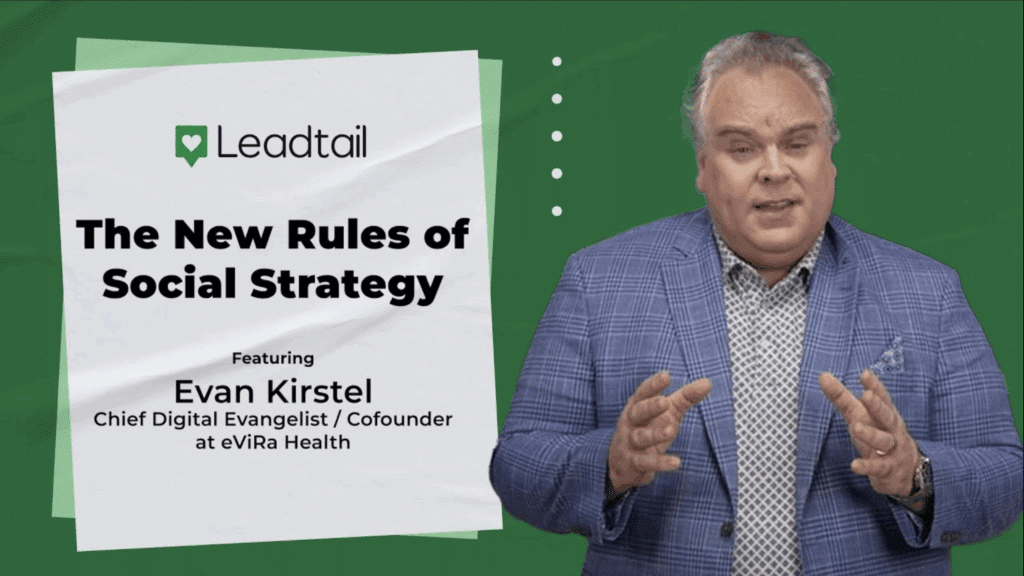
To help make sense of this evolution, we sat down with Evan Kirstel, a long-time technology influencer and expert in leveraging digital / social media to engage buyers and build community.
Evan gave us a deep dive into the modern marketing playbook for technology marketers. From the unexpected rebirth of traditional media to the game-changing impact of Generative AI and the critical necessity of “human-first” content, here are the key takeaways B2B marketers need to implement.
The Unthinkable Rebirth of “Old Media”
For years, the conventional wisdom in digital marketing was that “old media”—think television—was dead, particularly for B2B audiences. Evan’s current work is challenging this assumption. He is now working with a producer on a show called Tech Impact that airs on Fox Business and Bloomberg, focusing primarily on B2B technology.
This venture underscores a crucial lesson for technology marketers: You can’t just read the headlines and make assumptions.
While the distribution channel may be new—leveraging digital platforms to create and share—traditional formats are being reborn.
The key is to recognize that a highly polished, long-form studio production still has its place, especially when paired with a robust strategy for taking two-minute clips and deploying them effectively on TikTok and Instagram.
The Buffet of Platforms: You Must Be a Practitioner
Evan emphasizes that today, B2B marketers need to be platform polyglots—dabbling in everything and constantly challenging assumptions. He admits that he himself had previously written off platforms like Facebook and Instagram as irrelevant for enterprise tech, only to realize that they are “too big to ignore” with billions of monthly active users.
This is more than just about having a presence; it’s about being a practitioner. It requires continuous experimentation and evolution of strategy, even month-to-month, based on algorithm changes.
The B2B marketing mix must now include:
- Long-Form Thought Leadership: Yes, there is still room for 20-page white papers for those who dive deep.
- Mid-Form Summaries: A two-page carousel on LinkedIn can be used to summarize that long-form paper.
- Highly Polished Production: The TV show format, which is highly produced and polished, still has a role.
- Short-Form, Organic Clips: These are especially important for deployment across video-first platforms.
The goal is not to find a single answer, but to find the right mix based on your goals, ambitions, and where your particular audience engages.
The Power of the Human Touch: Leaders in the Front
What should B2B brands do to stand apart from the pack? Evan’s answer: the most effective brands put people out there first.
The era of hiding behind “some splashy brand campaign” or just showcasing a product, is over. The best brands—like Microsoft, Salesforce, and Dell—are seeing success by putting “human beings” and “the human touch” out front.
- Microsoft: Evan highlights how a single event, like the release of a quantum computing chip, was covered in multiple formats: deep technical content, a 90-second entertaining influencer review on TikTok, and Satya Nadell discussing it on CNBC. The content wasn’t “Microsoft,” it was individuals, thought leaders, and influencers.
- Salesforce: Mark Benioff is cited as a great spokesperson who is “out there in the front,” using social media to talk from his heart and about his point of view, blending social, digital, and in-person events very well.
- Dell: Michael Dell still talks about his dorm room experience and personally manages all his social media.
This shift requires B2B marketers to coach their executives to embrace a more visible, authentic, and personal presence across all channels.
Small is the New Big: The Return of Live Events
While digital channels have accelerated due to the pandemic , live, face-to-face events are making a comeback because humans still need emotional connection.
However, the dynamic has changed as the big mega-events are now primarily an excuse for micro-get-togethers and micro-events.
- T-Mobile’s “Unconventional Awards” at MWC and a digital health community track at CES are examples of hundreds of people breaking off from the main event to form smaller groups with shared interests.
- Evan says that “small is the new big”.
For B2B marketers, this means shifting focus from merely setting up a large, impersonal booth to orchestrating intimate, highly curated, and elevated experiences that allow for free-form conversation, deeper connections, and shared problem-solving.
The AI Imperative: A Godsend for Content Creators
For content creators, marketers, and digital professionals, Generative AI is simply a “godsend” and a “game changer”. The low-hanging fruit for B2B marketers includes:
- Efficiency: Tools are taking the pain out of tasks like video editing, audio leveling, podcasting, and short-form/long-form posting.
- Scalability: The ability to add captions or create short-form clips using AI can justify the modest cost of the tool.
- Research & Automation: Broader platforms like ChatGPT and Google Gemini offer research, automation, and “agentic” capabilities for back-office tasks.
The key message here is blunt: “Individuals or companies that don’t take advantage of these tools are really leaving a lot on the table”. Success now depends on experimentation and rolling up one’s sleeves to integrate these tools, as AI is not going to take your job, but a person using AI will.
The Algorithmic Shift: Content is King, Again
The rise of TikTok has had a profound, universal impact that goes beyond the platform itself. Evan states that “it’s the algorithm stupid”. The AI-driven, addictive algorithm of TikTok is now being copied or emulated by every major platform, including LinkedIn Video, YouTube Shorts, and Reels.
This algorithmic shift means that the number of followers you have is no longer the primary factor; it’s the quality of the content that matters.
Ironically, algorithm-driven development has driven the focus back to the content factory. With that in mind, B2B marketers need to consistently:
- Delivering Value: Explaining things and solving problems that keep the audience up at night.
- Committing Time and Effort: There are no organic shortcuts anymore. Consistency in message, audience, and content is key to allowing the network to find you.
Final Thoughts: Internal Engagement Fuels External Growth
As B2B marketers shift their focus back to acquisition and growth in 2025, Evan points to a factor that many companies overlook: employee engagement.
In a world reeling from the pandemic, remote work, and layoffs, many employees are disenchanted. Companies that want to double down on growth must double down on their employees.
This is a marketing mandate: implement employee engagement programs, put a spotlight on employees, and ensure leaders are at the forefront on social media. High morale, a sense of community, and visible leadership are powerful internal forces that directly translate into a more authentic and successful external brand presence.
Listen to the full episode of Tomorrow’s Best Practices Today with Evan Kirstel for more insights on building a future-proof B2B marketing strategy.